
As smart home device penetration exceeds 65% in 2025, proper wiring infrastructure has become the critical foundation for a reliable, efficient, and future-proof smart home ecosystem[1](@ref). Unlike traditional homes where wiring was designed primarily for basic lighting and power outlets, modern smart homes require sophisticated wiring systems that can support dozens of connected devices, from intelligent lighting and security systems to entertainment and environmental controls[6](@ref). This article explores the essential components and strategies for upgrading your home’s wiring to accommodate current and emerging smart technologies.
Why Smart Homes Demand Advanced Wiring Infrastructure
While wireless technologies like Wi-Fi and Bluetooth have made smart devices more accessible, they come with limitations including signal interference, range restrictions, and security vulnerabilities[6](@ref). A robust wired infrastructure provides the reliability and performance necessary for critical smart home applications where consistent operation is non-negotiable[4](@ref).
Advanced wiring systems serve as the “central nervous system” of a smart home, enabling seamless communication between devices while ensuring energy efficiency and security[6](@ref). Properly planned wiring eliminates common post-installation issues such as device disconnections, voice control failures, and scene malfunctions that plague over 70% of smart home users who attempt retrofits without infrastructure upgrades[2](@ref).
Key Advantage: Wired vs. Wireless
While wireless technologies offer convenience for adding devices, a wired backbone provides unparalleled reliability for core systems. Security cameras, smart locks, and voice assistants particularly benefit from wired connections that eliminate dropout issues common in congested wireless environments[6](@ref).
Essential Wiring Upgrades for Modern Smart Homes
1. Power Circuit Modernization: From “Sufficient” to “Redundant”
Traditional switches only require live wires, but smart switches typically need neutral wires for stable power delivery[1](@ref). The absence of neutral wires in older homes can increase retrofit costs by 30-50% due to additional wall chasing and wiring[1](@ref).
Solution: During renovation, ensure electricians install both live and neutral wires in every switch back box[1](@ref). For existing homes without neutral wires, consider neutral-to-live converters or smart circuit breakers as alternatives[1](@ref).
High-power smart devices like robotic vacuum cleaners, smart toilets, and projectors require dedicated circuits[1](@ref). Key locations for specialized power outlets include:
- Kitchen sink area: 2-3 outlets for water purifiers and garbage disposal units[1](@ref)
- Bathroom: Splash-proof outlets near smart toilets[1,3](@ref)
- Entertainment wall: 4-6 outlets for TVs, audio systems, and gaming consoles[1](@ref)
- Window treatments: Power sources in curtain boxes for motorized blinds[1,8](@ref)
2. Network Wiring: From “Single Point Coverage” to “Whole-Home Seamless”
With the average smart home containing 20-30 connected devices, robust networking infrastructure is crucial[1](@ref). Traditional single-router setups often create dead zones, especially in larger homes[1](@ref).
Recommended Solutions:
| Wiring Type | Specifications | Best Use Cases |
|---|---|---|
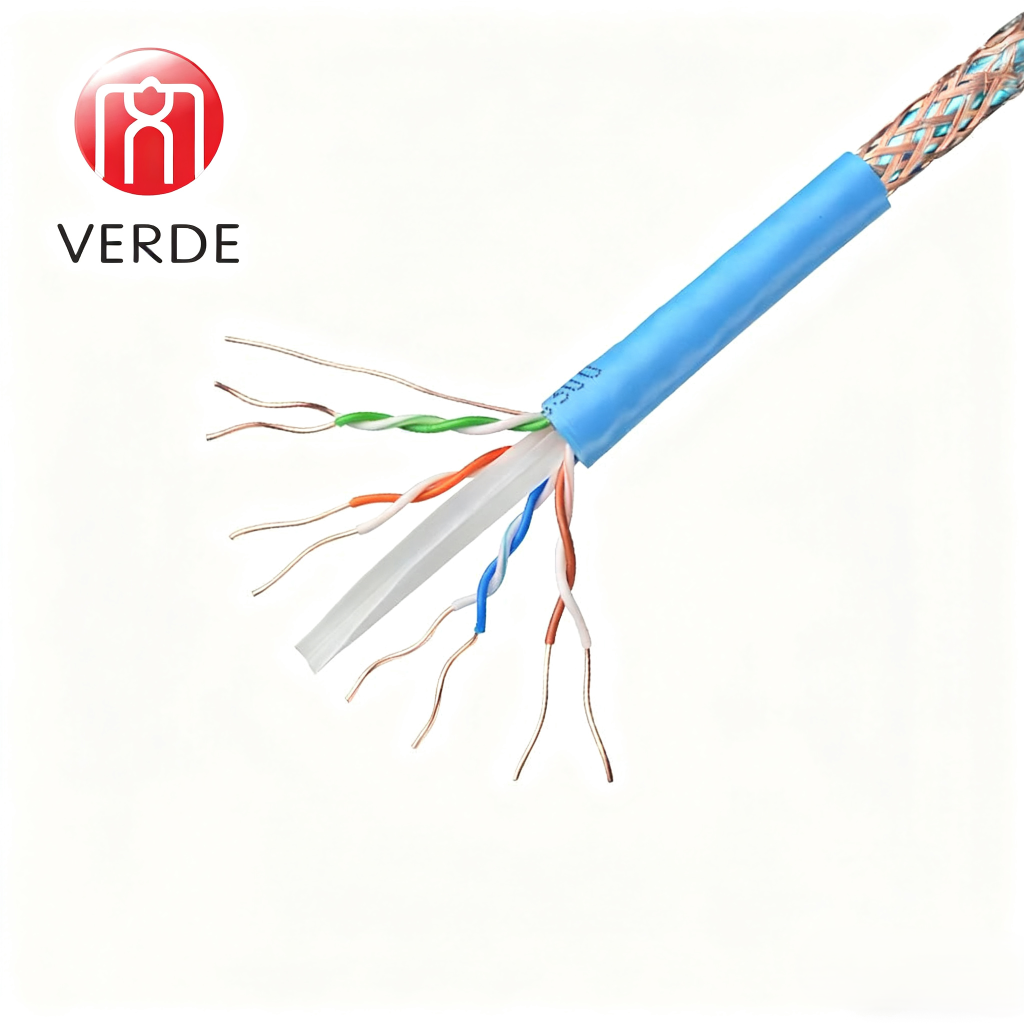
| Cat6/6A Ethernet | Up to 10 Gbps over 55 meters, 250MHz bandwidth[4,8](@ref) | Most residential applications, PoE devices |
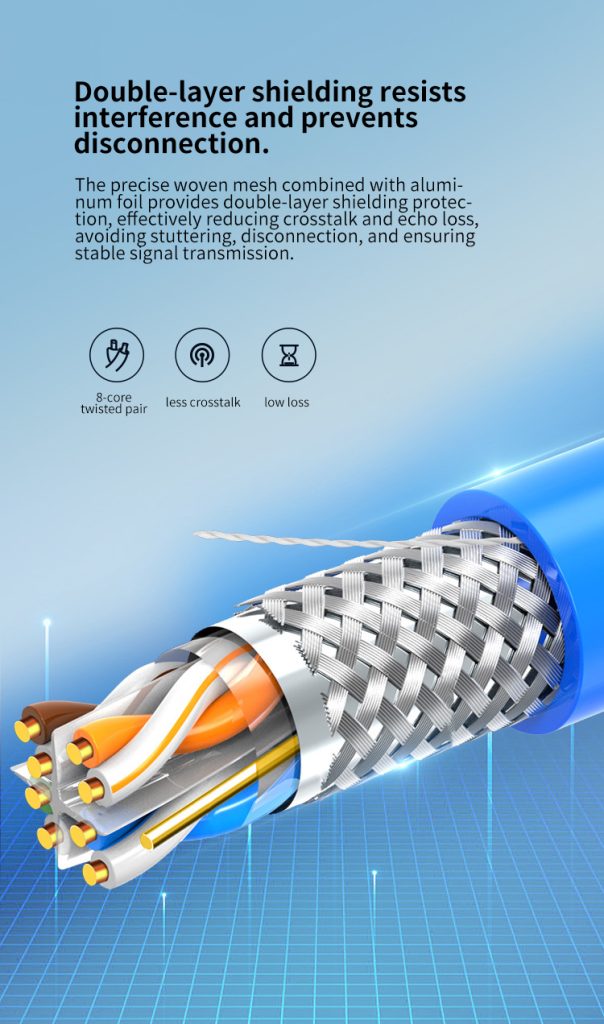
| Cat7/8 Ethernet | Up to 10-40 Gbps, 600-2000MHz bandwidth[2,4](@ref) | High-bandwidth applications, future-proofing |
| Fiber Optics | Long-distance transmission (>5km), immunity to EMI[8](@ref) | Large properties, backbone connections |
For optimal coverage, implement AC+AP (Access Controller + Access Point) systems with one AP per 60-100㎡[1,2](@ref). Critical locations for network ports include living rooms, bedrooms, and home offices[3](@ref). Additionally, consider running 1-2 spare cables in each network pathway to accommodate future technologies[3](@ref).
3. Specialized Wiring for Smart Home Subsystems
Lighting Control: Modern smart lighting goes beyond simple on/off control to creating ambient environments[2](@ref). Implement dual-circuit wiring for tunable white lighting (2700K-6500K color temperature range) and consider low-voltage control lines (RVV 4×0.75mm²) for advanced lighting systems[2,8](@ref).
Motorized Window Treatments: Curtain boxes should be at least 20cm wide for dual tracks and motors[8](@ref). Position power outlets 50-70cm from the top of the curtain box, hidden on the side for aesthetic appeal[3](@ref).
Security and Automation: Pre-wire for sensors in strategic locations[3,8](@ref):
- Ceiling-mounted presence sensors in kitchens and bathrooms
- Door/window contact sensors at main entry points
- Surveillance camera positions with both power and data connections
- Gas/water detectors near relevant utilities with audible alarms
4. Water Management System Wiring
Smart water devices require specialized plumbing preparations[1](@ref):
- Smart toilets: Cold/hot water connections with dedicated electrical outlets[1](@ref)
- Robotic vacuum cleaners: Water supply and drainage pipes in selected locations[1,3](@ref)
- Water purification systems: Pre-installed inlet/outlet connections under sinks[1](@ref)
- Recirculation systems: Return pipes for instant hot water delivery[1](@ref)
Implementation Strategy: Professional Workflow
Successful smart home wiring upgrades follow a structured process[8](@ref):
- Planning Phase: Identify requirements, create floor plans with marked device locations, and select compatible systems[3,8](@ref). Prioritize devices that support open standards like Matter 2.0 for better interoperability[3,8](@ref).
- Material Selection: Choose future-proof materials like shielded Cat6A+ cables, zero-fire version smart switches, and millimeter-wave presence sensors with under 5% false trigger rates[8](@ref).
- Installation Phase: Separate high-voltage and low-voltage cables by at least 30cm to prevent interference, using metal foil shielding at crossing points[1,3](@ref). Use waterproof enclosures (IP65 rating) in bathrooms and kitchens[8](@ref).
- Testing and Validation: Verify network performance (≥900Mbps wired, ≥400Mbps wireless), device responsiveness (<200ms for lighting controls), and system recovery after power outages (<30 seconds)[8](@ref).
Critical Consideration: Retrofit Challenges
Older homes may have outdated electrical systems that need complete replacement to handle modern smart home loads[5](@ref). Aluminum wiring common in mid-20th century homes presents particular safety concerns when supporting high-density electronic devices[5](@ref). Always consult qualified electricians before attempting significant upgrades.
Future-Proofing Strategies for Evolving Technologies
With smart home technology advancing rapidly, wiring infrastructure should accommodate not just current needs but anticipated developments:
- Spare Conduits: Install empty conduits (smurf tubes) between key locations to easily pull new cables in the future[3](@ref)
- Protocol-Agnostic Design: Focus on physical infrastructure that can support various communication protocols rather than betting on specific technologies[6](@ref)
- Centralized Distribution: Create a central wiring closet with proper ventilation, power conditioning, and space for additional equipment[2,7](@ref)
- Energy Management Ready: Pre-wire for potential energy monitoring and management systems, including current transformers and smart meter interfaces[6](@ref)
Conclusion: Wiring as the Smart Home’s Foundation
Smart home wiring is the invisible yet critical framework that determines the reliability, scalability, and longevity of your connected home ecosystem. While wireless technologies continue to improve, a robust wired infrastructure remains essential for core systems requiring maximum reliability[6](@ref). By investing in proper wiring during construction or renovation phases, homeowners can avoid costly retrofits and ensure their homes remain compatible with emerging technologies for years to come[4](@ref).
The most successful smart home implementations blend strategic wired infrastructure with selective wireless enhancements, creating homes that are both technologically advanced and inherently livable. As smart home technology evolves toward greater integration with energy management and spatial computing, the wiring decisions made today will increasingly determine tomorrow’s home intelligence capabilities[1](@ref).