
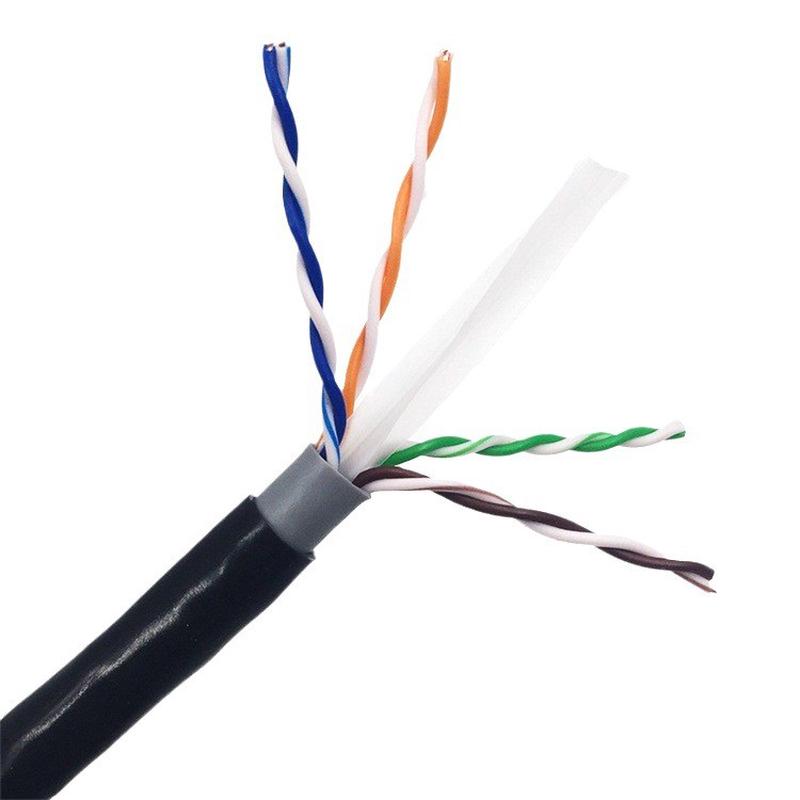
Selecting the right Ethernet cable is crucial for building a reliable and high-performance network. With various categories, materials, and specifications available, making the optimal choice requires understanding your specific needs and the technical characteristics of different cables. This guide provides comprehensive information to help you make an informed decision.
Ethernet Cable Categories and Performance
Ethernet cables are categorized based on their performance specifications, primarily their maximum supported bandwidth and transmission speed. Higher categories generally support faster speeds and higher frequencies but come at increased cost.
| Category | Max Speed | Bandwidth | Max Distance | Primary Applications |
|---|---|---|---|---|
| Cat5e | 1 Gbps | 100 MHz | 100m | Basic home networks, internet browsing |
| Cat6 | 10 Gbps (55m) | 250 MHz | 100m | Gaming, 4K streaming, smart homes |
| Cat6a | 10 Gbps | 500 MHz | 100m | Large homes, offices, future-proofing |
| Cat7 | 10 Gbps | 600 MHz | 100m | Data centers, high-interference environments |
| Cat8 | 25-40 Gbps | 2000 MHz | 30m | Data centers, enterprise networks |
Choosing the Right Category
For most home users, Cat5e provides sufficient performance for basic internet usage at a low cost. However, Cat6 offers better future-proofing and is recommended for new installations, as it can handle higher speeds and provides improved performance for gaming and 4K video streaming[1,5](@ref).
Cat6a is ideal for those planning for future 10 Gbps networks, especially in larger homes where longer cable runs are necessary. Cat7 and Cat8 are generally unnecessary for residential use and are primarily deployed in data centers and enterprise environments[5,16](@ref).
Cable Materials and Construction
The material composition of Ethernet cables significantly affects their performance, durability, and price. Understanding these differences helps avoid common pitfalls and ensures long-term reliability.
| Material Type | Performance | Lifespan | Cost | Recommendation |
|---|---|---|---|---|
| Oxygen-Free Copper (OFC) | Excellent (Low resistance: <10Ω/100m) | 10+ years | High | Highly recommended for permanent installations |
| Copper-Clad Aluminum (CCA) | Good (Resistance: ~28Ω/100m) | ~5 years | Medium | Budget option for short-term use |
| Copper-Clad Steel | Fair (Resistance: ~40Ω/100m) | Limited | Low | Avoid for permanent installations |
| Pure Aluminum | Poor (High resistance) | 2-3 years | Very Low | Not recommended |
Shielding Types
Ethernet cables come in two main shielding varieties: Unshielded Twisted Pair (UTP) and Shielded Twisted Pair (STP). UTP cables are sufficient for most home environments where electromagnetic interference is minimal[1,5](@ref). STP cables, which include additional shielding, are necessary in environments with significant electrical noise, such as industrial settings or when running cables near electrical wiring[3,5](@ref).
Proper grounding is essential for shielded cables to be effective. Incorrect installation can actually degrade performance rather than improve it[1,5](@ref).
Price Considerations and Value Analysis
Ethernet cable pricing depends on multiple factors, including material costs, manufacturing processes, and market demand. Understanding these factors helps identify where to invest for best value.
Key Price Factors
- Material Costs: Copper content is the primary cost driver. Oxygen-free copper cables command premium prices but offer superior performance and longevity[9,10](@ref).
- Category and Specifications: Higher category cables (Cat6a, Cat7, Cat8) involve more complex manufacturing processes and stricter tolerances, increasing their cost[5,16](@ref).
- Shielding: Shielded cables typically cost 20-30% more than unshielded equivalents due to additional materials and manufacturing complexity[5](@ref).
- Brand and Quality Assurance: Reputable brands often charge more but provide better quality control and consistency[5](@ref).
- Market Factors: Copper prices fluctuate based on market conditions, affecting cable prices accordingly[9,10](@ref).
Price vs Performance Analysis
For most residential applications, Cat6 cables made with copper-clad aluminum offer the best balance of performance and value. For permanent installations where cables will be inaccessible (in walls or conduits), investing in oxygen-free copper Cat6 cables provides long-term reliability despite the higher initial cost[5,6](@ref).
Business and enterprise environments should prioritize oxygen-free copper Cat6a cables for their superior performance, reliability, and better support for Power over Ethernet (PoE) applications[6,17](@ref).
Application-Specific Recommendations
Choosing the right Ethernet cable depends significantly on your specific use case and environment. Here are tailored recommendations for common scenarios:
Home Networks
For typical home use with internet speeds up to 1 Gbps, Cat5e or Cat6 UTP cables are sufficient[1,5](@ref). If running cables through walls or ceilings, opt for oxygen-free copper versions for long-term reliability. For smart homes with multiple high-bandwidth devices, Cat6 UTP provides better performance and future-proofing[1,5](@ref).
Gaming and Media Streaming
Online gaming and 4K media streaming benefit from lower latency and higher bandwidth. Cat6 oxygen-free copper cables are recommended for their stable performance[5,6](@ref). For in-wall installations to gaming consoles or media centers, consider Cat6a for future 10 Gbps support[5,16](@ref).
Office and Business Environments
Office networks should use Cat6 or Cat6a cables with oxygen-free copper conductors[6,17](@ref). In environments with significant electrical equipment, shielded (STP) variants may be necessary[3,5](@ref). For PoE applications (powering phones, access points, etc.), thicker copper conductors in oxygen-free copper cables perform better[6,7](@ref).
Industrial and Special Environments
Industrial settings with heavy machinery require shielded Cat6a or Cat7 cables with robust jackets resistant to oils, chemicals, and physical damage[5,17](@ref). Outdoor installations need cables with UV-resistant and waterproof jackets[17](@ref).
Data Centers and High-Performance Computing
Data centers typically use Cat6a, Cat7, or Cat8 cables for backbone connections[16,17](@ref). Fiber optic cables are often preferred for their superior bandwidth and distance capabilities[1,17](@ref).
Practical Installation Considerations
Proper installation is as important as selecting the right cable. These practical tips ensure optimal performance:
Cable Length
Always use the shortest cable necessary for your connection. Excess cable length can cause signal degradation and unnecessary clutter[15](@ref). For runs longer than 100 meters, consider using a network switch or fiber optic cable instead of Ethernet[15,17](@ref).
Bending Radius
Avoid sharp bends in Ethernet cables, as this can damage internal conductors and affect performance[5](@ref). Maintain a bend radius of at least four times the cable diameter[5](@ref).
Environmental Factors
Keep Ethernet cables away from electrical wiring to avoid interference[5](@ref). In areas with potential physical damage, use protective conduits. For outdoor installations, use specifically rated outdoor cables with UV protection[17](@ref).
Termination Quality
Properly terminated connectors are essential for reliable connections. Poorly crimped connectors can cause significant performance issues[5](@ref). Use quality RJ45 connectors and appropriate crimping tools for best results.
Conclusion and Final Recommendations
Selecting the right Ethernet cable involves balancing performance requirements, environmental factors, and budget constraints. For most users, Cat6 cables with oxygen-free copper conductors offer the best balance of performance, durability, and value.
Key takeaways for Ethernet cable selection:
- Choose Cat5e for basic home networks with speeds up to 1 Gbps
- Select Cat6 for gaming, media streaming, and future-proofing
- Invest in Cat6a for enterprise environments and future 10 Gbps networks
- Prioritize oxygen-free copper for permanent installations and reliability
- Use shielded cables only in high-interference environments
- Always purchase from reputable manufacturers to ensure quality and specifications accuracy
By understanding cable categories, materials, and their appropriate applications, you can build a network infrastructure that delivers reliable performance both now and in the future.